Smith, Cassander L. "Race in early America and The Last of the Mohicans." Throughlines. www.throughlines.org/suite-content/race-in-early-america-and-the-last-of-the-mohicans. [Date accessed].
Race in early America and The Last of the Mohicans
Theorizing race from Black African and Native perspectives

Course description
This graduate course is designed to appeal to students interested in early modern literature, including those invested in early American and early African American literature.
The course views early American literature from a transatlantic perspective, examining the development of racial discourses in the literature—resulting from English/New World encounters with Black Africans and Natives. This course applies the underlying principle of critical race theory: that race has had a profound effect on the social, legal, historical, and literary structures that comprise United States culture. To better understand how US culture arrived at this point, students will journey back to early America to examine the earliest manifestations of racial discourses in an ever-expanding English American empire.
Students will study the novelist James Fenimore Cooper, who was arguably the most widely known novelist from early America, and will read his 1826 novel, The Last of the Mohicans. The book is the account of a frontiersman named Natty Bumppo, or Hawkeye, and his efforts to navigate the backwoods of upstate New York during the French and Indian War in the 1750s. The novel addresses many themes and ideals that are quintessential to how American identity is defined all these years later. Students will interrogate what this novel means and how it means it.
In addition, students will read Cooper's novel intertextually, comparing The Last of the Mohicans to other works of early American literature in order to properly contextualize Cooper and to get a better sense of the literary landscape of early America.
This is a survey course, which means the course’s main objective is to provide students with a general overview of early American literature with a special emphasis on race. Students will examine how early Americans wrote about ‘race,’ how they categorized people based on cultural and geographical differences, and how they defined themselves based on those differences.
The course’s study will emphasize the stakes and the problems racial classification created for each writer in American settler colonialism and imperialism. Why did race matter, how did it matter, and what did these writers do when they encountered figures in the Americas whose actions defied racial classification?
As an important aspect of this examination, students will interrogate Black and Native experiences. What did it mean to be Black or Native in the early Atlantic world? How did early Black and Native writers and thinkers talk about race? In what ways might these figures be seen engaging with their environments in ways that accommodate, challenge, or reshape the racial discourses of the day? These questions will not only help students theorize race in the early modern Atlantic from the perspective of Black Africans and Natives but will also help them reorient their mindset by taking seriously Black Africans and Natives as intellectuals and as cultural doers during the early modern period.
Course objectives
At the conclusion of this course, students should be able to:
- Identify a range of early American/Atlantic texts that display the complex power structures at play in the early Atlantic World.
- Recognize the complex interactions among multicultural groups.
- Read texts from multiple perspectives.
- Write responses that illustrate an understanding of the themes and tensions that characterize early American/Atlantic literature.
- Position themselves within academic discourses relevant to their disciplines and the central themes and issues of this course.
Assignments
Two-page exploratory prompt – Part 1
I am fond of this quote from Maya Angelou: “Intelligence is not knowing the answers but asking the questions.”
These two writing assignments are designed to give you practice in asking open-ended questions that produce avenues for further research. Your job is to pose one or a series of related provocation question(s) about early American literature and culture based on your initial reading of Cooper’s The Last of the Mohicans. In essence, I am asking you what questions come up for you about what early American literature is, or is not, based on your reading of Cooper’s novel.
In your prompt, you don’t simply present the question(s). You want to also provide a premise or background information about how and why you are asking the question(s).
For example, what in your reading of Cooper’s novel led you to your line of inquiry? You can quote key passages from the text. What are the stakes of finding answers to the question(s)? In other words, how might this line of inquiry change current conceptions of Cooper’s text and/or of early America?
You do not have to answer the question(s) you pose. This is an exercise in exploration and contemplation. Be comfortable with the not-knowing, the mulling over. At the end of the semester, I will ask you to revisit your exploratory prompt. By the end of sixteen weeks, can you answer any of those questions? Do you have new questions?
Two-page exploratory prompt – Part 2
At the end of the semester, you will revisit the question, or series of questions, you posed in the first assignment. After having discussed early American literature and several secondary sources for some 16 weeks, how has your thinking about your initial question(s) changed? How might the other readings help you arrive at an answer to your question(s)? How might the sources complicate your questions(s) or create new questions?
This is a self-reflective exercise that asks you to apply your budding expertise in early American literature to begin formulating answers to your questions.
Abstract assignment
In this abstract assignment, you will present the argument about which you plan to write your final paper. Keep in mind that the abstract is a specific genre; the emphasis is just as much on form as it is on content.
The abstract should be between 250 to 500 words (no more than 1 page, single-spaced): you should clearly lay out what your argument is and what it adds to current discussions about the text(s) you are working with.
In other words, what are you saying that is new? You also want to give a brief example from the text(s) to illustrate your argument. Sample abstracts will be provided for reference. In addition, I want you to search scholarly journals, listservs, and academic websites to find at least one outlet that would be a good fit for the paper you plan to write. The idea is that you will submit the abstract to an active call for papers. I must approve your argument before you can move onto the final stage.
Conference paper and presentation
As the major project for this course, you are expected to write a traditional, academic presentation-quality paper on a topic relevant to issues we discussed in class. That paper, approximately 8 to 10 pages, should exhibit original thought and make some form of scholarly contribution to the study of early American culture and race. At the end of the semester, you will present a 10-minute version of your essay and share your scholarly findings with your classmates.
Course readings and sequence
In assigned order
Part 1 - Narratives of exploration
Primary texts
- Cooper, James Fenimore. The Last of the Mohicans. 1826.
- Native American oral narratives:
- Talk Concerning the First Beginning (Zuni).
- Creation of the Whites (Yuchi).
- The Singer’s Art (Aztec).
- Columbus, Christopher.
- Journal of the First Voyage.
- Narrative of the Third Voyage.
Secondary texts
- Kolodny, Annette. “Letting Go Our Grand Obsessions: Notes Toward a New Literary History of the American Frontiers.” American Literature, vol. 64, no. 1, March 1992: pp. 1–18.
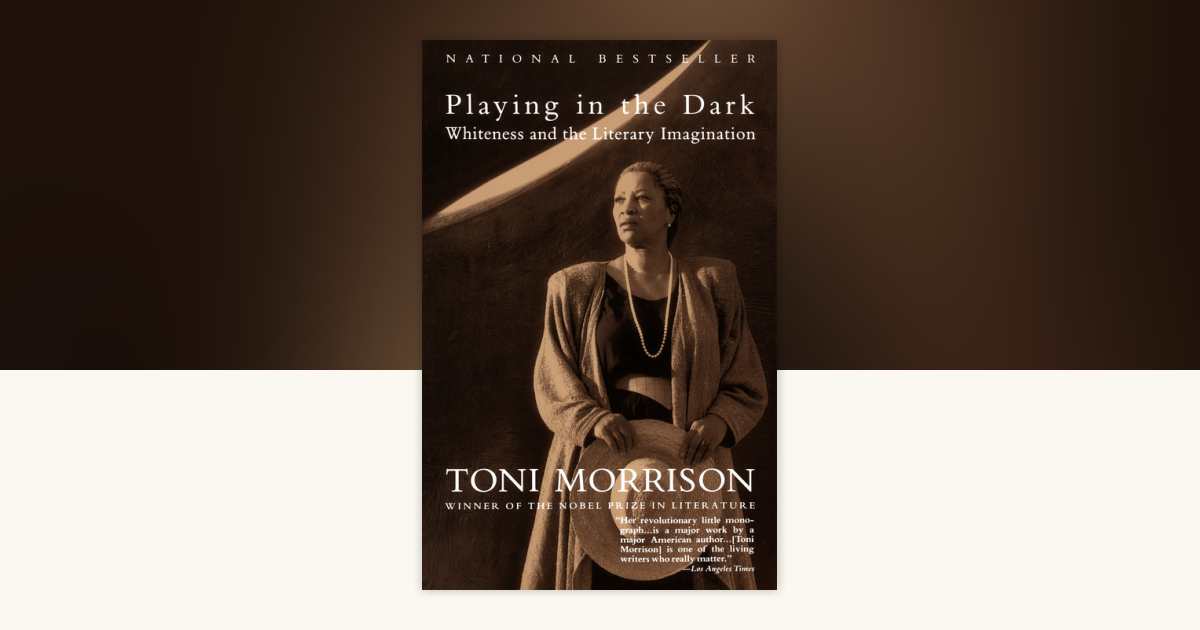
- Morrison, Toni. Playing in the Dark: Whiteness and the Literary Imagination (Harvard University Press, 1992).
Part 2 - The Puritan errand into the wilderness
Primary texts
- Smith, John.
- The Generall Historie of Virginia, New-England, and the Summer Isles (1624): book III, chapters 2 and 8.
- A Description of New England. 1616.
- Hariot, Thomas. A Briefe and True Report of the New Found Land of Virginia. 1588.
- Winthrop, John. “A Model of Christian Charity.” 1630.
- Bradford, William. Of Plymouth Plantation: chapters I, IX.
- Bradstreet, Anne. The Tenth Muse Lately Sprung Up in America. 1650.
- “The Prologue.”
- “The Author to Her Book.”
- “To My Dear and Loving Husband.”
- “Upon the Burning of Our House July 10th, 1666.”
- “To My Dear Children.”
- Morrison, Toni. A Mercy (Alfred A. Knopf, 2008).
- Rowlandson, Mary White. The Sovereignty and Goodness of God. 1682.
- Hammon, Briton. “A Narrative of the Uncommon Sufferings and Surprizing Deliverance of Briton Hammon.” 1760.
- Sewall, Samuel. “The Selling of Joseph.” 1700.
- Saffin, John. “A Brief and Candid Answer to a Late Printed Sheet, Entitled The Selling of Joseph.” 1701.
- Eliot, John. “Tears of Repentance.” 1653.
- Mather, Cotton. “The Negro Christianized.” 1706.
Secondary texts
- Arvin, Maile, Eve Tuck, and Angie Morrill. “Decolonizing Feminism: Challenging Connections between Settler Colonialism and Heteropatriarchy.” Feminist Formations, vol. 25, no. 1, Spring 2013: pp. 8–34.
- Bercovitch, Sacvan. “The Typology of America’s Mission.” American Quarterly, vol. 30, no. 2, Summer 1978: pp. 135–155.
- Foster, Frances Smith. “A Narrative of the Interesting Origins and (Somewhat) Surprising Developments of African-American Print Culture.” American Literary History, vol. 17, no. 4, Winter 2005: pp. 714–740.
- Miller, Perry. “Errand into the Wilderness” The William and Mary Quarterly 10 (January 1953): pp. 3-32.
- Smith, Cassander L. “Race.” A History of American Puritan Literature, edited by Kristina Bross and Abram Van Engen (Cambridge University Press, 2020): pp. 211–224.
Part 3 - This land is our land
Primary texts
- Jefferson, Thomas. Notes on the State of Virginia, 1785: Queries VI, XI, XVIIl.
- Wheatley, Phillis. Poems on Various Subjects, Religious and Moral. 1773.
- “To Maecenas.”
- “Letter to the Right Hon’ble The Earl of Darmouth.”
- “On Being Brought From Africa to America.”
- “Letters to Obour Tanner.”
- Apess, William. “An Indian’s Looking-Glass for the White Man.” 1833.
- Douglass, Frederick. Narrative of the Life of Frederick Douglass, an American Slave (1845): chapters 1, 2, 3, 9, 10.
- Jacobs, Harriet. Incidents in the Life of a Slave Girl, 1861: chapters 1, 2, 5, 10, 17, 21.
Secondary texts
- Bynum, Tara. “Phillis Wheatley’s Pleasures.” Reading Pleasures: Everyday Black Living in Early America (University of Illinois Press, 2023).
- Mt. Pleasant, Alyssa, Caroline Wigginton, and Kelly Wisecup. “Materials and Methods in Native American and Indigenous Studies.” Early American Literature, vol. 53, no. 2, 2018: pp. 407–444.
- Myles, Anne G. “Queering the Study of Early American Sexuality.” The William and Mary Quarterly, vol. 60, no. 1, January 2003: pp. 199–202.
- Zafar, Rafia. “Capturing the Captivity: African Americans among the Puritans.” MELUS, vol. 17, no. 2, Summer 1991–1992: pp. 19–35.
Part 4 - Sweet land of liberty
Primary texts
- Occom, Samson. “A Short Narrative of My Life.” 1768.
- Hall, Prince. “To the Honorable Council and House of Representatives.” 1777.
- Anonymous
- “Mulattos.”
- “Letter to Bishop Edmund Gibson on Behalf of a Mixed-Race Community in Virginia.” 1723.
Secondary texts
- Bynum, Tara. “Cesar Lyndon’s Lists, Letters, and a Pig Roast.” Early American Literature, vol. 53, no. 3, 2018: pp. 839–849.
Further learning
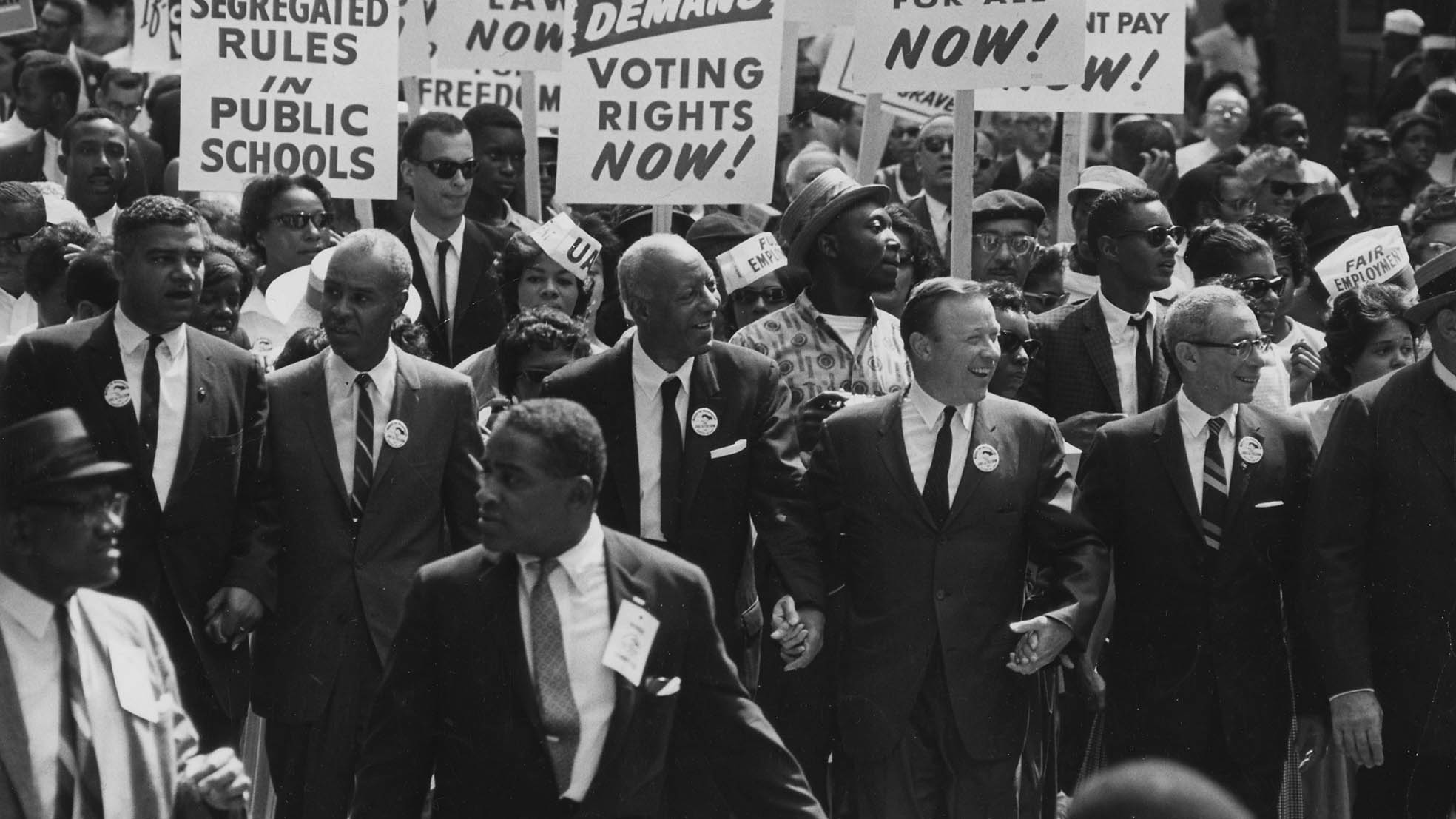
Black protest tradition in early African American literature
Respectability politics has long circumscribed the Black American experience and the literature produced by Black communities. This course examines some of the earliest examples of that literature to understand where, how, and why protest emerged in African American literature as a strategy to combat American racism and state-sanctioned violence.

Recommended
Slavery history, metaphors, and meaning
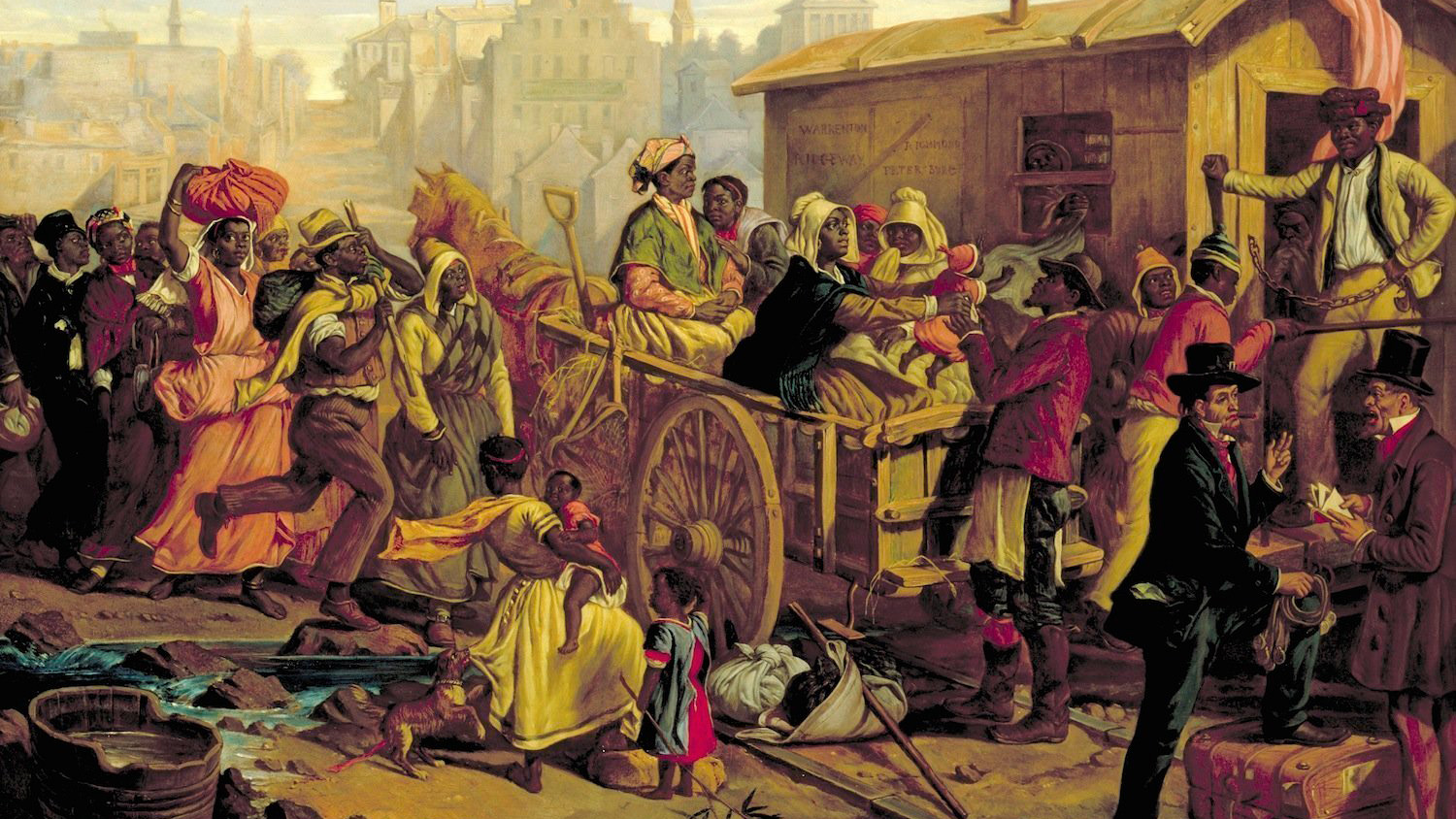
The history of slavery shaped the economic, political, and cultural foundations of the modern world. This syllabus explores how historians study slavery through archives, material culture, and critical theory, while examining the enduring legacies of enslavement in questions of race, capitalism, memory, and justice.