
Smith, Cassander L. "Black protest tradition in early African American literature." Throughlines. www.throughlines.org/suite-content/black-protest-tradition-in-early-african-american-literature. [Date accessed].
Black protest tradition in early African American literature
Examining the history of protest and respectability politics in Black American communities

An annotated syllabus
Created by Cassander Lavon Smith
This course was created and taught for the first time in fall 2020, in the aftermath of the murder of George Floyd. It is based on a 16-week semester.
Course description
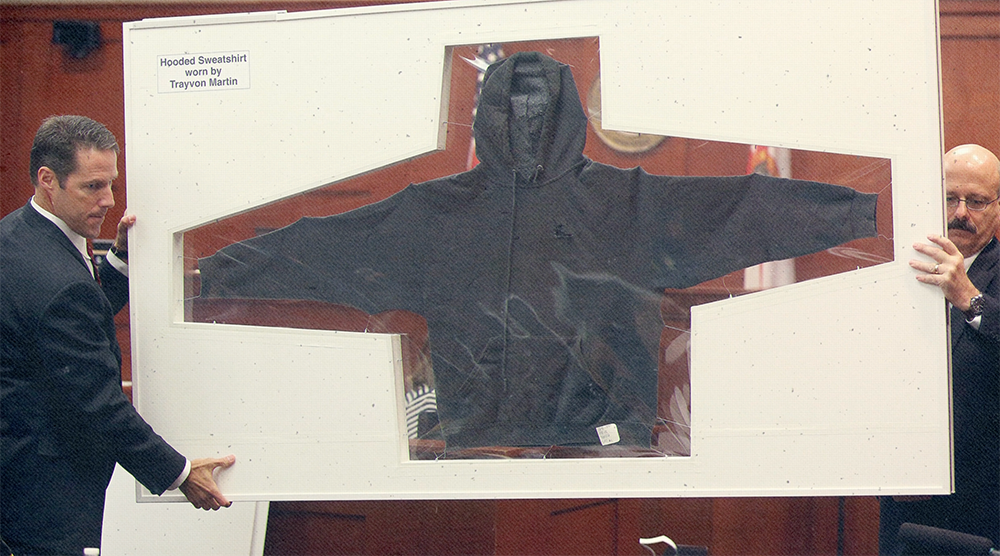
In the wake of George Floyd’s murder on May 25, 2020, by Minneapolis police, Black leaders and news commentators filled the airwaves with pleas for people to protest "peacefully," propping up the idea that there are acceptable and unacceptable ways to protest. News coverage even homed in on peaceful protestors and castigated those caught looting and starting fires. But is there really a right way to protest? Football quarterback Colin Kaepernick began a silent, nonviolent protest by taking a knee during the playing of the National Anthem. Other athletes white and Black joined in. Their silent, nonviolent protest sparked national outrage, even prompted the president of the United States to call them “sons of bitches.” The protest all but cost Kaepernick his career.
The violent/nonviolent dichotomy that characterizes our discussions of riots and protests is a false one. Social protests by design transgress—they disrupt the status quo, which makes protest an inherently violent act, an inherently disrespectful act. The rhetoric, especially when directed at Black protest movements, is embedded in a deeper impulse to police the behavior of Black Americans, to describe their behavior in terms of right and wrong, respectable versus disrespectable.
In other words, we attach a moral judgement to forms of protest. It is a kind of respectability politics, the term used to describe a form of assimilation and self-policing that occurs when members of an oppressed group seek to model (and condemn those in the group who do not model) the cultural and social mores of a dominant group in order to illustrate their humanity and advocate for equality. Today, for example, we shun the Black militancy of civil rights leaders like Malcolm X and Stokely Carmichael. We praise the nonviolent strategies of the Rev. Dr. Martin Luther King, Jr. He is the one who gets a national holiday, the one for whom elementary schools and streets in every major city are named. The irony, of course, is that King, deeply unpopular during his own time, leveraged Black militancy and white violence to advance the civil rights movement. However, we describe the history of that movement in terms of its nonviolent aspects. We are driven to do this, in part, by respectability politics.
Respectability politics has long circumscribed the Black American experience and the literature produced by Black communities. This course examines some of the earliest examples of that literature to understand where, how, and why protest emerged in African American literature as a strategy to combat American racism and state-sanctioned violence. We will look at how African American writers have engaged the oxymoronic impulse of protestation. Specifically, the course examines the protest tradition as a balancing act whereby Black writers simultaneously protest American racism and state-sanctioned violence while also engaging in discourses of respectability to pronounce their humanity.
Learning objectives
At the conclusion of this course, students will be able to:
- Identify a range of early African American texts that display the complex history of African American protest.
- Define respectability politics.
- Position protest traditions and respectability politics within proper historical context and consider the ways in which these coping strategies change over time and geography. Students will discuss how those changes affect opportunities for Black Africans to ‘regenerate’ in hostile locales.
- Read texts from multiple perspectives/angles of vision.
- Write responses that illustrate an understanding of the themes and tensions that characterize an African American literary tradition.
- Position themselves within academic discourses relevant to their disciplines and the central themes/issues of this course.
Required texts
Primary
- Douglass, Frederick. Narrative of the Life of Frederick Douglass, an American Slave. 1845.
- Equiano, Olaudah. The Interesting Narrative of the Life of Olaudah Equiano. 1789.
- Felix. “Petition for Freedom to the Massachusetts General Court.” January 6, 1773. Pamphlet printed as part of The Appendix; Or, Some Observations on the Expediency of the Petition of the Africans, living in Boston, Boston: E. Russell, 1773. Reprinted in A Documentary History of the Negro People in the United States, edited by Herbert Aptheker, Vol. 1 (Citadel Press, 1951): pp. 6–7.
- Hall, Prince. “Thus Doth Ethiopia Stretch Forth Her Hand from Slavery to Freedom and Equality.” In A Charge, Delivered to the African Lodge, June 24, 1797, at Menotomy, printed by Benjamin Edes, 1797. Evans Early American Imprint Collection (University of Michigan Library Digital Collections).
- Horton, George Moses. “The Slave’s Complaint” and “On Hearing of the Intention of a Gentleman to Purchase the Poet’s Freedom.” The Hope of Liberty. 1829.
- Jacobs, Harriet. Incidents in the Life of a Slave Girl. 1861.
- King, Martin Luther, Jr. “Letter from a Birmingham Jail.” 1963.
- Locke, John. Two Treatises of Government. 1689.
- Mills, Charles W. The Racial Contract (Cornell University Press, 1997).
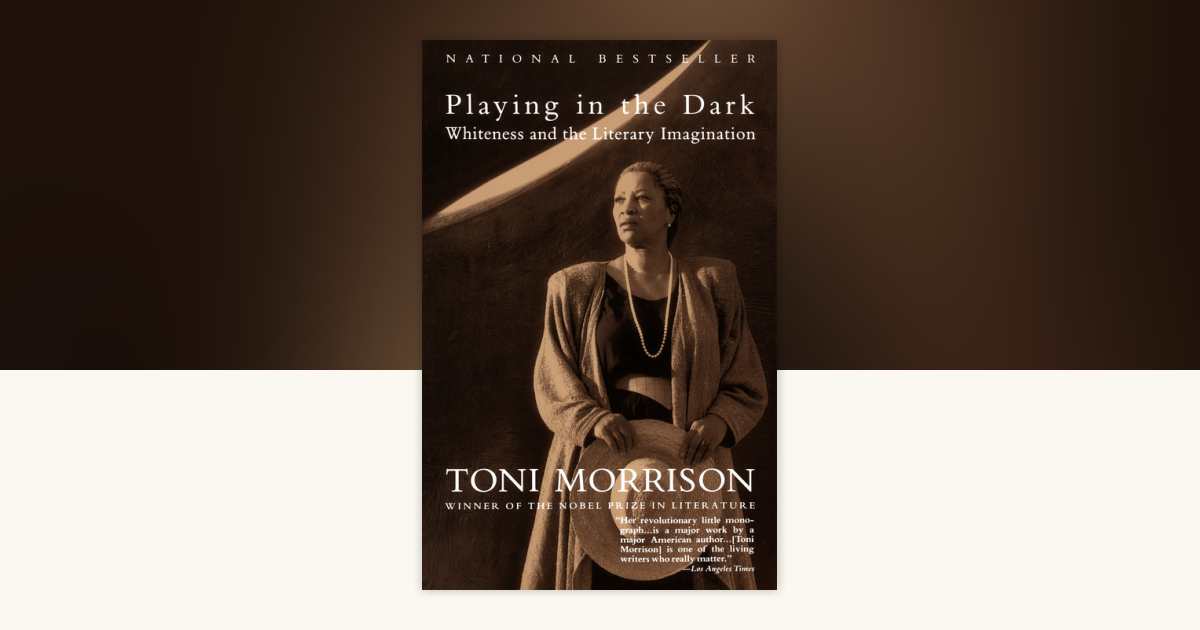
- Morrison, Toni. A Mercy (Alfred A. Knopf, 2008).
- Morrison, Toni. Beloved (Alfred A. Knopf, 1987).
- Stewart, Maria W. “What If I Am a Woman?” Productions of Mrs. Maria W. Stewart, Presented to the First African Baptist Church and Society, of the City of Boston (Friends of Freedom and Virtue, 1835): pp. 51–6.
- Walker, David. Appeal to the Coloured Citizens of the World. 1829.
- Wheatley, Phillis. “On Liberty and Slavery” Poems on Various Subjects, Religious and Moral. 1773.
- Whitehead, Colson. The Underground Railroad (Doubleday, 2016).
- Wilson, Harriet E. Our Nig; or, Sketches from the Life of a Free Black, in a Two-Story White House, North (George C. Rand and Avery, 1859).
Secondary
- Harris, Trudier. “African American Protest Poetry.” National Humanities Center TeacherServe: Freedom’s Story (National Humanities Center, 1996–97 updated edition).
- Higginbotham, Evelyn Brooks. Righteous Discontent: The Women’s Movement in the Black Baptist Church, 1880–1920 (Harvard University Press, 1993).
- Marable, Manning, and Leith Mullings, eds. Let Nobody Turn Us Around: Voices of Resistance, Reform, and Renewal: An African American Anthology (Rowman & Littlefield, 2000): excerpts.
- Muhammad, Precious Rasheeda. “Black Protest Writing from WEB DuBois to Kendrick Lamar” (Literary Hub, 2020).
- Spillers, Hortense. “Mama’s Baby, Papa’s Maybe: An American Grammar Book.” Diacritics, vol. 17, no. 2 (1987):, pp. 65–81.
Course sequence with annotations
Week 1 - The roots of American racism
The first week is about introducing students to the topic of race. Through a PowerPoint-based lecture, they learn that race is both a biological myth and social reality. In biological terms, humans are all different as a result of adaptation. It is an objective, observable fact that human beings look different. It is a social fact that humans are treated differently based on those observable differences. The lecture is focused mostly on medieval and early modern Europe, in which students learn about the Western roots of American racism and its malleability in the shaping of racial categories, like whiteness, and the ordering of social, human relations. This foundational information equips them with the historical perspective they will need to engage the primary readings.
Week 2 - Black Africans in early America
The previous week was about situating race as an idea within an early European context. Students also learned about how the concept of whiteness emerges as a category of privilege, necessitating protest responses against that privilege. In this second week, the PowerPoint lecture is an overview about how, why, and when Black Africans arrived in what would become the United States.
These first two weeks of the course are designed to equip students with a common vocabulary and basic understanding of the mechanics of race, preparing them to engage with the more nuanced manifestations of racial ideologies reflected in the course readings in subsequent weeks.
Week 3 - Black respectability politics and state-sanctioned violence
This course weaves together three threads of discussion—Black respectability politics, state-sanctioned violence, and racism. Throughout the semester students discuss how these three threads, which shape social conditions, are all related. In this third week of class, the focus is on contemporary discussions of these three threads so students can begin to see how they relate in a 21st-century context.
They read the work of Malcom X and the Rev. Dr. Martin Luther King, Jr. They also watch/listen to the musical performances of Kendrick Lamar and Beyoncé (optional) and read a couple of think-pieces about how they fit into a larger African American tradition of protest and respectability. As they work through the material this week, pay attention to the term "white liberal." Where is it used? Why? What is a "white liberal," and why might this figure be fundamental to a Black protest tradition? How and why is (neo-) liberalism a problem for Black America?
Additional Resources
- “The Blacker the Berry,” Kendrick Lamar.
- “Black Parade,” Beyoncé.
- Fitzgerald, Kiana. Review of “Black Parade."
Week 4 - Racism and violence; its beginnings
In the first two weeks of the course, students learned more about the historical underpinnings of race. In the previous week, they immersed themselves in some of the contemporary conversations that are a consequence of racial ideologies. After three weeks, the three threads for the course have been established: protest, respectability politics, and racism.
During the fourth week, there is one more piece to add to the foundational puzzle: social contract theory. This week, students explore how respectability politics, protest, and racism function in a kind of matrix. The three theorists assigned for this week will provide students with vocabulary to articulate that matrix and its mechanics. They are introduced to the work of Charles Mills, John Locke, and Orlando Patterson as a way of thinking about social structures and how/why societies form. Why are we social animals in the first place? How do systems of white supremacy operate and engender privilege, violence, and protest? They will engage with terms such as white fragility, white fatigue, supremacy, privilege, liberty, natural rights, and humanity. After this week, they will have a clearer sense of what we mean when we say "state-sanctioned" violence.
Week 5 - First generation of protest
In this week, discussion turns to early African American literature so students can start to see how the literature of Black America has been circumscribed by and has shaped discourses of race, respectability, and protest. Students will start to see how a protest tradition first emerges in African American literature. They read the introduction to Manning Marable and Lelith Mullings's anthology Let Nobody Turn Us Around. This anthology is an urtext of sorts for those studying the Black protest tradition in African American literature. In addition to that, they read an excerpt from Olaudah Equiano’s autobiography. They also read a petition drafted by a group of enslaved people living in colonial Massachusetts, who were asking the General Assembly for citizenship and freedom on the eve of the Revolutionary War. And they read a pamphlet from the Black Freemason Prince Hall, a leading spokesperson for Black Americans at the end of the 18th century.
In these primary readings, students can chart the ways in which the writers protest. Questions to guide them might include:
- What are they protesting?
- Who is their audience?
- What strategies do they employ to compel their audiences to action?
- To what extent do they embody tenets of respectability?
- Do they challenge racial ideas at all? If so, how? Where? To what effect?
- Thinking about the social contract, what might any of these writers say about Locke's social contract ideas?
- How do the texts support/challenge the social contract theory? What about liberalism?
- Do the writers valorize a liberal agenda or condemn it?
Week 6 - Respectability as a form of protest
The previous week, students read and discussed several 18th century texts which can be read as originating a protest tradition in early African American literature. This week the emphasis turns to the 19th century and the works of David Walker and Maria Stewart. Both of these Black writers were free-born individuals. That means they never experienced slavery themselves. Yet, Walker dedicates his text, An Appeal to the Coloured Citizens of the World, to speaking on behalf of the plight of enslaved Black Africans. Stewart, the first woman (of any race) to speak before mix-gendered audiences in the US, addresses racial inequality in general. She condemns the oppression of Black Americans, both enslaved and free. These writers are two of the earliest civil rights activists in US history. In addition to the primary readings from Walker and Stewart, students will read critical scholarship from Evelyn Brooks Higginbotham, who was one of the first historians to theorize respectability politics in the early 1990s. She locates the rise of respectability politics at the turn of the 20th century and coming out of agendas set by Black church women.
As students read through the texts for this week, they should pay attention to the idea of Black nationalism, which both Walker and Stewart espouse. Questions include:
- How do they call for a Black nationalism?
- What is Black nationalism?
- How does it contrast/compare to Malcolm X?
- What is the role of violence is achieving that Black nationalism and/or racial equality?
- How do the texts support or challenge respectability as a political ideal?
- Thinking in terms of race, how do these Black writers understand race? Is it social, biological, innate? Is it based on climate or godly intervention?
Week 7 - Protest in the slave narrative
In this week's reading, students discuss a little more in-depth about constructions of masculinity and enslavement in the slave narrative of Frederick Douglass. Hortense Spillers's influential essay "Mama's Baby, Papa's Maybe" will help students make sense of gender in Douglass's narrative. As students read through his narrative, they can focus on all the ways he proclaims his manhood. Also, note his representations of violence. Some questions to consider include:
- What does violence do for Douglass's condemnation of slavery?
- How does his representation of violence compare with that of Walker and Equiano?
- How might he be in conversation with Stewart?
- Also, students should continue thinking about the social contract, liberalism, and white supremacy. What does Douglass's narrative tell us that can help sharpen students’ understandings of these terms?
Week 8 - Protest as a gendered argument
For this week, students will continue the discussion of Spillers's essay and Douglass's narrative and talk more in depth about gender in relationship to respectability politics and protest in early African American culture. Added to the discussion is Harriet Jacobs's Incidents in the Life of a Slave Girl for a deeper engagement with issues of gender in an early African American protest tradition. Here are some questions students might ponder:
- What is womanhood for Jacobs? And how does she see herself measuring up?
- What is manhood?
- What function does sex play in how she protests slavery and white supremacy?
- Where is the line for Jacobs between sexual agency and sexual assault? In other words, what does consent 'mean' for an enslaved Black woman?
- What function does violence play in Jacobs's narrative and how does it compare with Douglass's representations?
Week 9 - Protest in early Black fiction
Over the previous two weeks, students discussed the nonfiction slave narratives of Douglass and Jacobs. They discussed how and why Black Americans imagined gender differences in their efforts to protest white supremacy and slavery. This week the conversation turns to a different genre—fiction.
They read one of the first novels written by a Black woman in the United States, Our Nig, by Harriet Wilson. Published in 1859, the novel tells the 'quasi-autobiographical' story of a Black girl named Frado. She is abandoned by her mother and stepfather, forced to live as the ward of a rich white family in the North. Back then, there was no Department of Family and Children Services. Legally, Frado is not enslaved. As an orphan, though, she must work in the home of this family to earn her keep. Her life is characterized by violent abuse, mostly inflected by the family's matriarch, Mrs. Beaumont. As they read through the novel, students can track the kinds of violence to which Frado is subjected. Can this kind of abuse be considered "state-sanctioned"? In order to answer that question, students must first define "state-sanctioned."
Other questions to consider:
- How, if at all, does Frado protest her predicament?
- Do we see elements of respectability politics governing her reaction to the treatment she receives?
- The women seem to abuse Frado more frequently than do the men in the family. Why do you think that is?
- What is Harriet Wilson's rhetorical project?
- If we read this novel within a protest tradition, what is Wilson protesting and why?
Week 10 - Poetics of protest
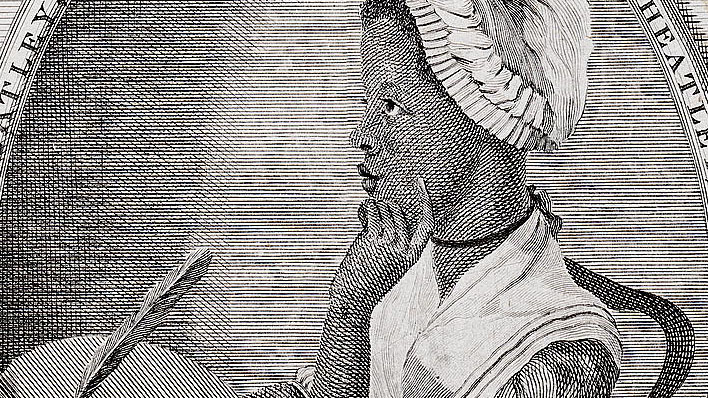
So far in the course, students have read and discussed narrative forms in early African American literature. This week the course pivots to poetry. Specifically, students read the poetry of Phillis Wheatley, who we credit as the first person of African descent living in what would become the United States to publish a book of poetry. She publishes that book, Poems on Various Subjects, Religious and Moral, in 1773.
They will also read poems from George Moses Horton, Wheatley’s literary successor. As students read these poems, they can think about how African American poetry emerges out of and/or fuels a protest tradition. In other words, what is protestive about Wheatley and Horton's poetry? For added context on the protest tradition and poetry, students will read an essay from Professor Trudier Harris.
Weeks 11-14 - Neo-slave narratives and reimagining the protest tradition
The next three weeks of the course focus on 20th and 21st-century African American novels that are part of the neo-slave narrative genre: Morrison’s A Mercy and Beloved, and Whitehead’s The Underground Railroad. These contemporary novels evoke the same issues and problems as their 18th- and 19th-century counterparts.
Students are asked to consider how the practice of protest has evolved. For example, does Morrison evoke slavery and racism in A Mercy to challenge the same social structures and oppressions as Harriet Jacobs? How is the writing project different? Returning to the concept of neo-liberalism from week three, how might Morrison’s novel be a statement about neo-liberalism? Ending the course with the three novels here brings the discussion full circle back to week three where students discussed contemporary representations of violence, respectability, and racism.
Further learning

-DrawingExtraordinaryappearances-2%20August%201797.jpg)

Recommended
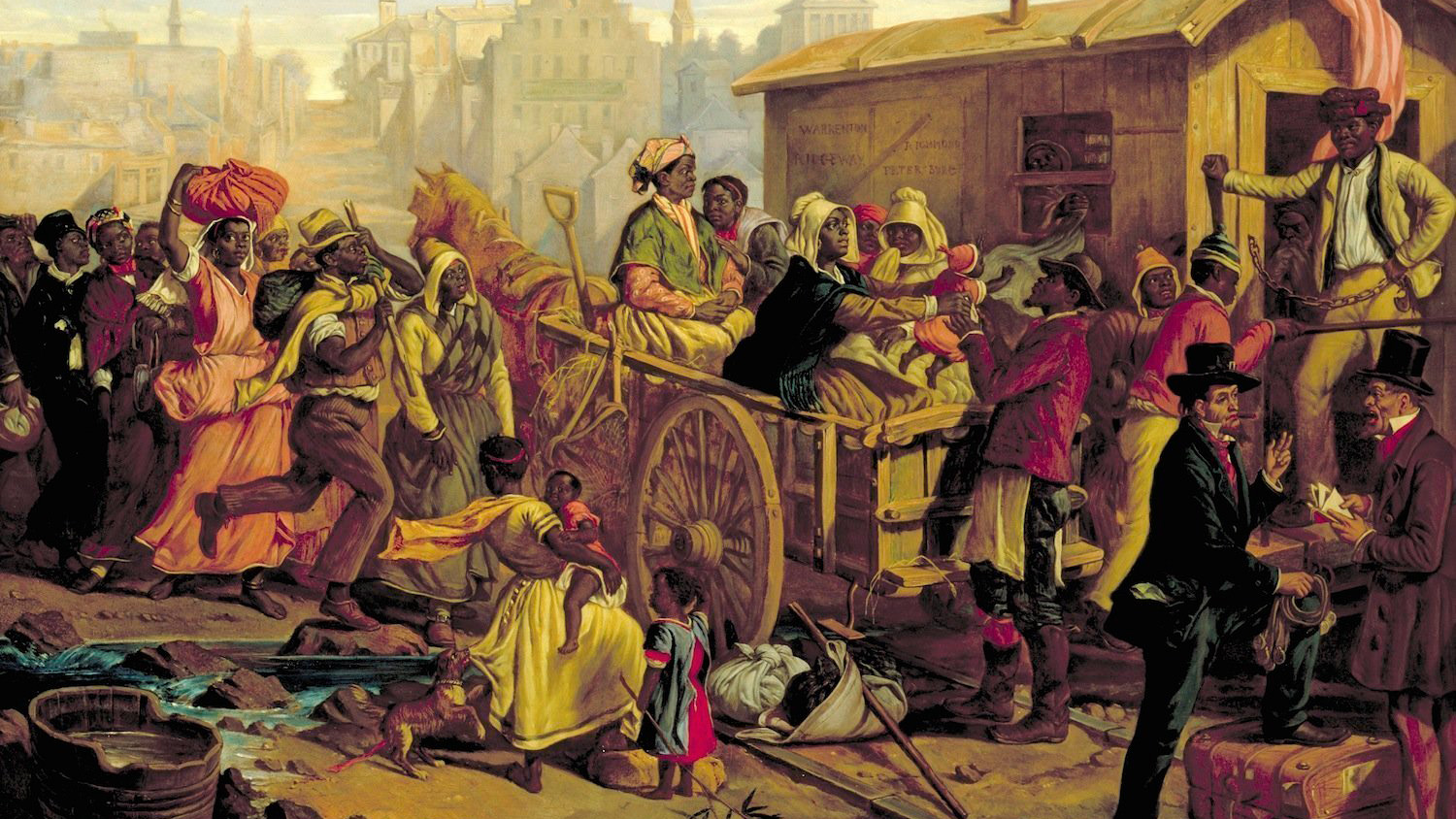
Slavery history, metaphors, and meaning
The history of slavery shaped the economic, political, and cultural foundations of the modern world. This syllabus explores how historians study slavery through archives, material culture, and critical theory, while examining the enduring legacies of enslavement in questions of race, capitalism, memory, and justice.


