
Morgan, Jennifer L. "Slavery history, metaphors, and meaning." Throughlines. www.throughlines.org/suite-content/slavery-history-metaphors-and-meaning. [Date accessed].
Slavery history, metaphors, and meaning
Studying slavery through archives, material culture, and critical theory
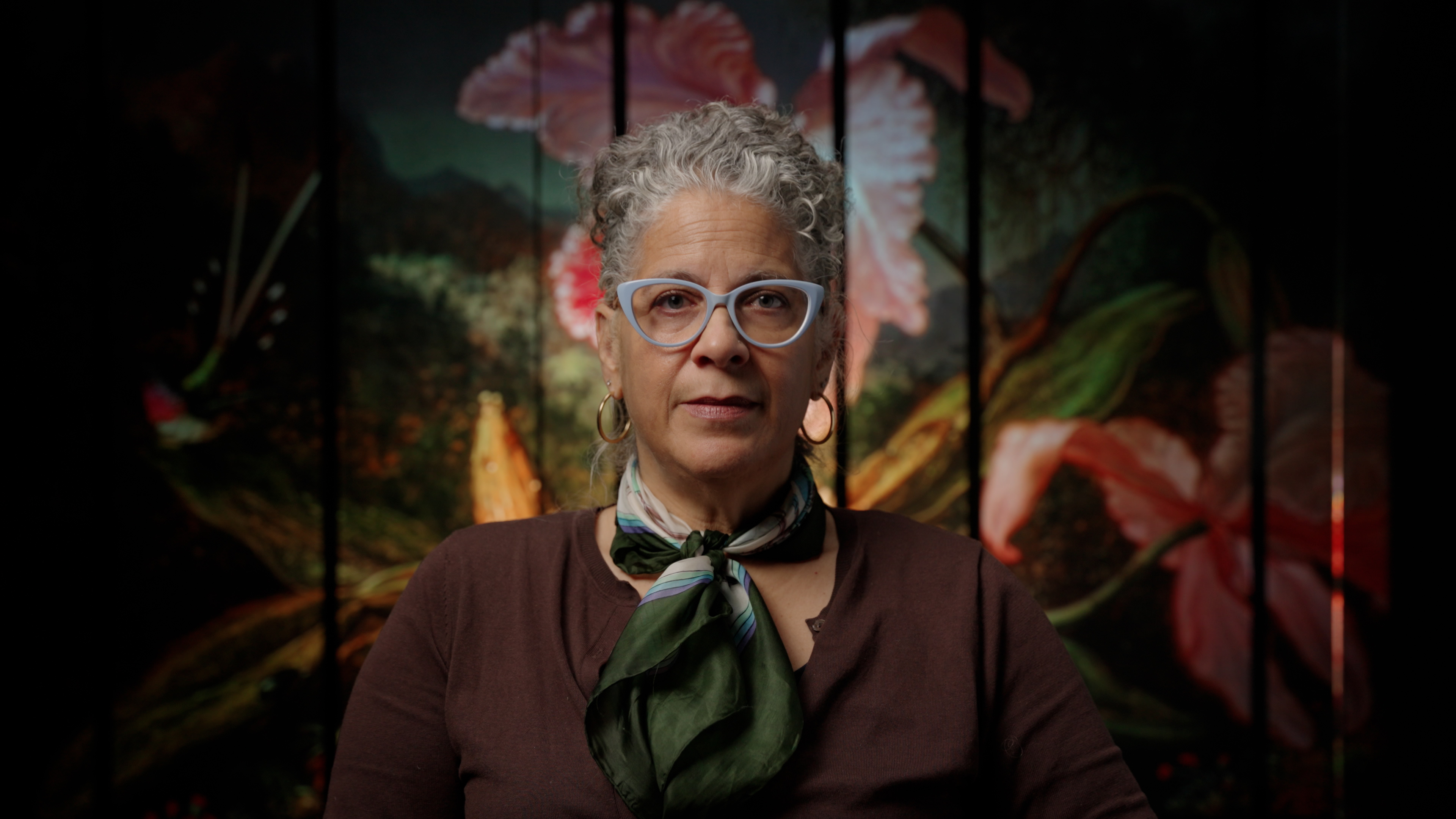
The history of slavery had an enormous impact on the emergence of the cultural, economic, and political systems of the modern world. But what do we know about the actual systems of slavery? How did they develop? How did enslaved people experience and refuse the system of slavery in the Atlantic? How did hereditary racial slavery come to define the emergence of the modern Atlantic world?
This class will engage with recent scholarship on slavery by historians of the Black Atlantic world. The material histories of slavery and enslavement will be the basis from which the class asks how the story of slavery gets told, how we arrive at conclusions about what enslavement meant, and how the metaphor of slavery and enslavement has been deployed both in the past and in our present.
This class aims to offer students a layered understanding of the history and historiography of slavery. They will engage directly with archival materials and will gain knowledge of and familiarity with interpreting historical evidence. Students will also encounter theoretical and critical scholarship on what is known as the afterlives of slavery.
Week 1 - Racial capitalism
Reading
- Robinson, Cedric J. Black Marxism: The Making of the Black Radical Tradition. 3rd ed. Chapel Hill: University of North Carolina Press, 2021. Read Chapter 4, "The Process and Consequences of Africa's Transmutation," 71–101, and Chapter 5, "The Historical Archaeology of the Black Radical Tradition," 121–66.
Primary sources
- University College London. Legacies of British Slave-ownership Database: Documents of Interest.
Week 2 - Currencies
Reading
- Vilches, Elvira. New World Gold: Cultural Anxiety and Monetary Disorder in Early Modern Spain. Chicago: University of Chicago Press, 2010. Read Chapters 1–2, "New World Gold" and "Selling the Indies," 23–94.
Primary sources
- Gold Mines of Santa Maria, 1685.
Week 3 - African sovereignties
Reading
- Bennett, Herman L. African Kings and Black Slaves: Sovereignty and Dispossession in the Early Modern Atlantic. Philadelphia: University of Pennsylvania Press, 2018. Read Chapter 2, "Mythologies," 32–51.
Primary sources
- Seventeenth-Century Images of African Nobility.
Week 4 - Financial instruments
Reading
- Wennerlind, Carl. Casualties of Credit: The English Financial Revolution, 1620–1720. Cambridge, MA: Harvard University Press, 2011. Read Chapter 6, "The South Sea Company and the Restoration of Public Credit."
Primary sources
- Jamaica Board of Trade Correspondence, 1724–1727.
Week 5 - Culture emerging and transformed: value and visuality
Reading
- Fowler, Caroline. Slavery and the Invention of Dutch Art. Durham, NC: Duke University Press, 2024. Read Chapter 3, "Monuments and Architectural Painting," 52–80, and Chapter 4, "Domestic Interiors and Natural History," 81–107.
Primary sources
- Birth on Board a Slave Ship, 1814.
- Layout of the Ship Marie Séraphique, 1769.
Week 6 - Tastes
Reading
- Hall, Kim F. The Sweet Taste of Empire. Philadelphia: University of Pennsylvania Press, 2025. Read Chapter 1, "Sugarworke," 28–82.
Primary sources
- Ligon, Richard. A True and Exact History of the Island of Barbados. London, 1657. Read the description of sugar making.
Week 7 - Economies
Reading
- Green, Toby. A Fistful of Shells: West Africa from the Rise of the Slave Trade to the Age of Revolution. Chicago: University of Chicago Press, 2019. Read Chapter 3, "Ready Money: The Gold Coast and the Gold Trade," and Chapter 4, "Rivers of Cloth, Masks of Bronze: The Bights of Benin and Biafra," 108–85.
Primary sources
- West African Map of Slave Forts, 1660s.
Week 8 - Gender
Reading
- Brown, Kathleen M. Good Wives, Nasty Wenches, and Anxious Patriarchs: Gender, Race, and Power in Colonial Virginia. Chapel Hill: University of North Carolina Press, 1996. Read Chapter 4, "Engendering Racial Difference, 1640–1670."
Primary sources
- Acts of the Virginia Assembly, seventeenth century.
Week 9 - Legalities
Reading
- Rabin, Dana Y. "Slavery, Law, and Race in England and Its New World Empire." Law and History Review 40 (2022): 581–90.
Week 10 - Kinship
Reading
- Morgan, Jennifer L. "Partus Sequitur Ventrem: Law, Race, and Reproduction in Colonial Slavery." Small Axe 22, no. 1 (2018).
Week 11 - Reverberations: Archiving slavery
Readings
- Hartman, Saidiya V. "Venus in Two Acts." Small Axe 12, no. 2 (2008): 1–14.
- McKittrick, Katherine. "Mathematics Black Life." The Black Scholar 44, no. 2 (2014).
Week 12 - Reproductive slavery
Reading
- Weinbaum, Alys Eve. The Afterlife of Reproductive Slavery: Biocapitalism and Black Feminism's Philosophy of History. Durham, NC: Duke University Press, 2019. Read the Introduction, "Human Reproduction and the Slave Episteme," and Chapter 1, "The Surrogacy/Slavery Nexus."
Week 13 - Racial capitalism
Reading
- Johnson, Walter. "To Remake the World: Slavery, Racial Capitalism, and Justice." Boston Review, February 2018.
Week 14 - Afterlives
Reading
- Sharpe, Christina. In the Wake: On Blackness and Being. Durham, NC: Duke University Press, 2016. Read Chapter 1, "The Wake," and Chapter 4, "The Weather."

-DrawingExtraordinaryappearances-2%20August%201797.jpg)

